
Moisture Control is the Key to Mold Control
INVESTIGATING, EVALUATING, AND REMEDIATING MOISTURE AND MOLD PROBLEMS
|
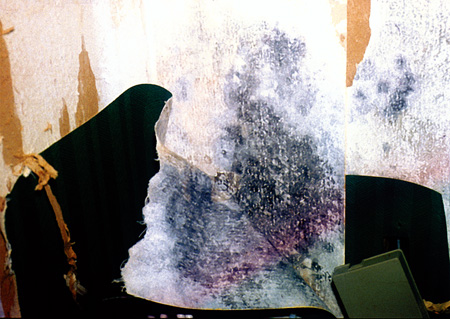
Hidden Mold In some cases, indoor mold growth may not be obvious. It is possible that mold may be growing on hidden surfaces, such as the back side of dry wall, wallpaper, or paneling, the top of ceiling tiles, the underside of carpets and pads, etc. Possible locations of hidden mold can include pipe chases and utility tunnels (with leaking or condensing pipes), walls behind furniture (where condensation forms), condensate drain pans inside air handling units, porous thermal or acoustic liners inside ductwork, or roof materials above ceiling tiles (due to roof leaks or insufficient insulation). |
|||
|
Some building materials, such as dry wall with vinyl wallpaper over it or wood paneling, may act as vapor barriers,(5) trapping moisture underneath their surfaces and thereby providing a moist environment where mold can grow. You may suspect hidden mold if a building smells moldy, but you cannot see the source, or if you know there has been water damage and building occupants are reporting health problems. Investigating hidden mold problems may be difficult and will require caution when the investigation involves disturbing potential sites of mold growth—make sure to use personal protective equipment (PPE). For example, removal of wallpaper can lead to a massive release of spores from mold growing on the underside of the paper. If you believe that you may have a hidden mold problem, you may want to consider hiring an experienced professional. If you discover hidden mold, you should revise your remediation plan to account for the total area affected by mold growth. ________________ 5 For more information on vapor barriers and building construction, see Resources List. It is important that building materials be able to dry; moisture should not be trapped between two vapor barriers or mold may result. |
||||

IAQ Home
http://www.epa.gov/iaq/molds/i-e-r_hm.html April 2, 2001